Accident Report
Smoking Bowl – Accident Report
Hatcher Pass, Alaska
Location: NW Aspect of Skyscraper Ridge
Lat/Lon: 61.77537, -149.30956
Date: April 29, 2026 Time: 13:00
Report by: Hatcher Pass Avalanche Center
Contact: info@hpavalanche.org Website: www.hpavalanche.org
Synopsis
Three skiers triggered a cornice fall which subsequently triggered an avalanche on the slope below. Two skiers fell with the cornice and were caught in the subsequent avalanche. One skier was buried to their waist. Neither skier was injured.
Avalanche Summary
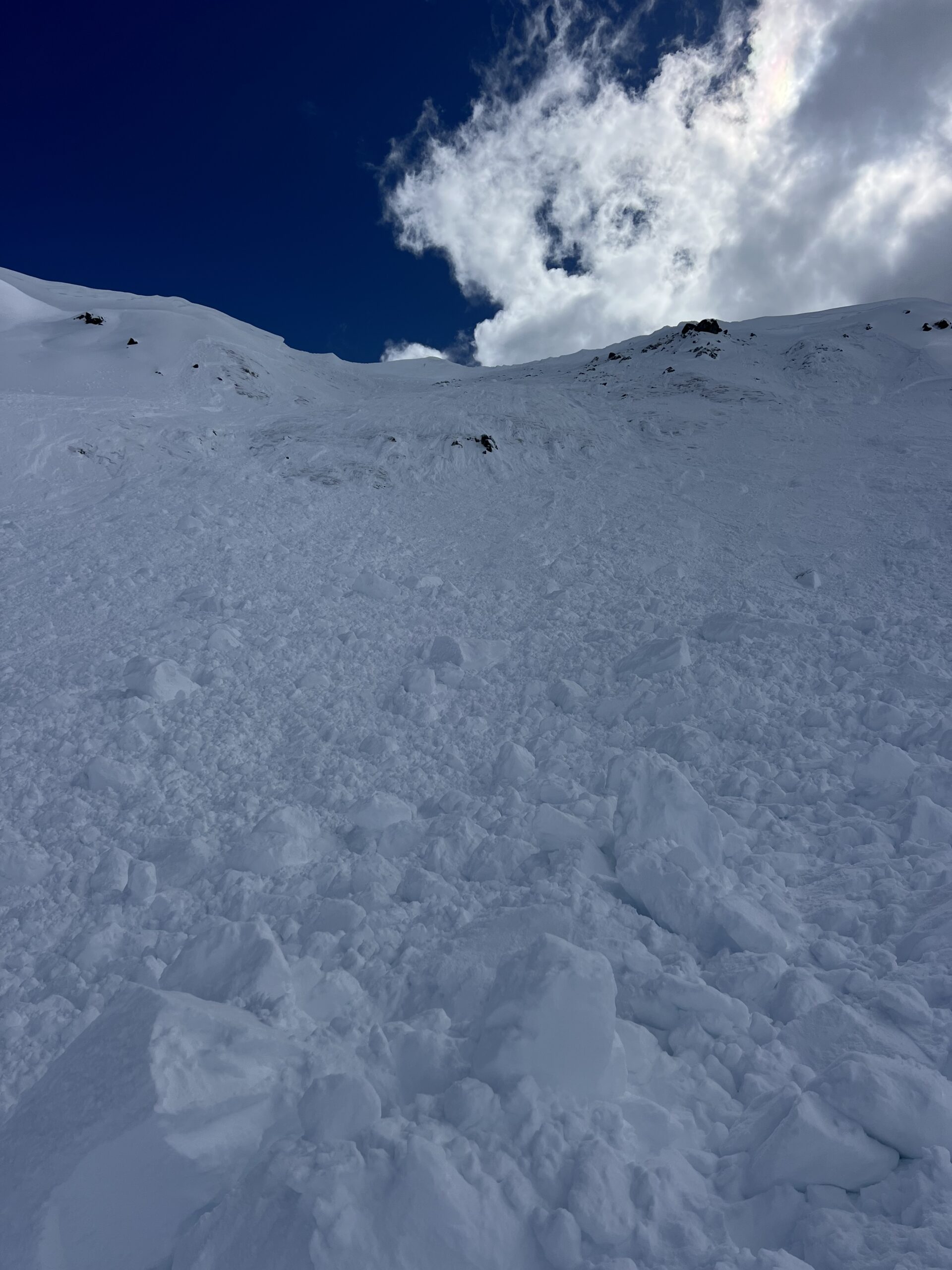
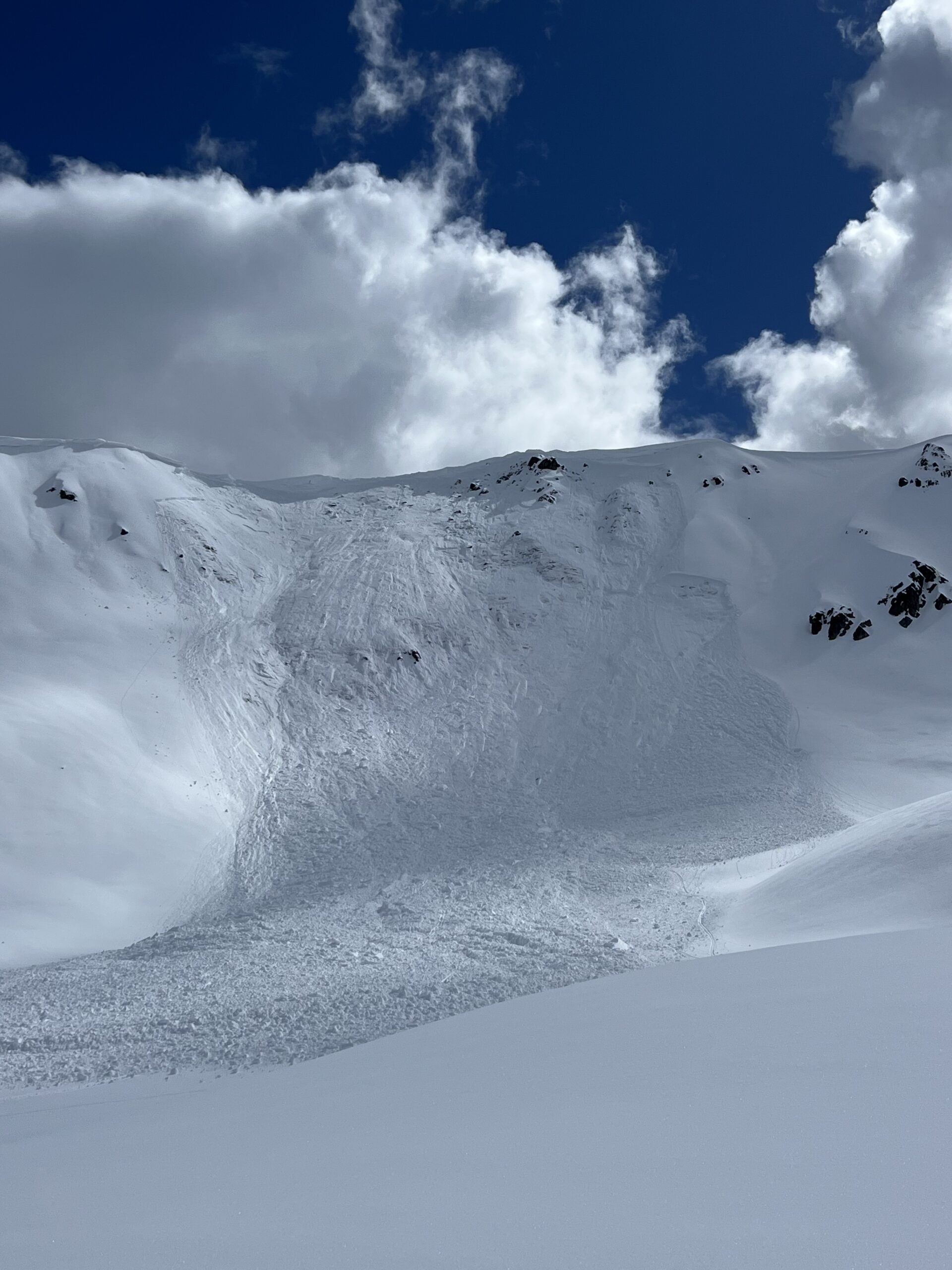
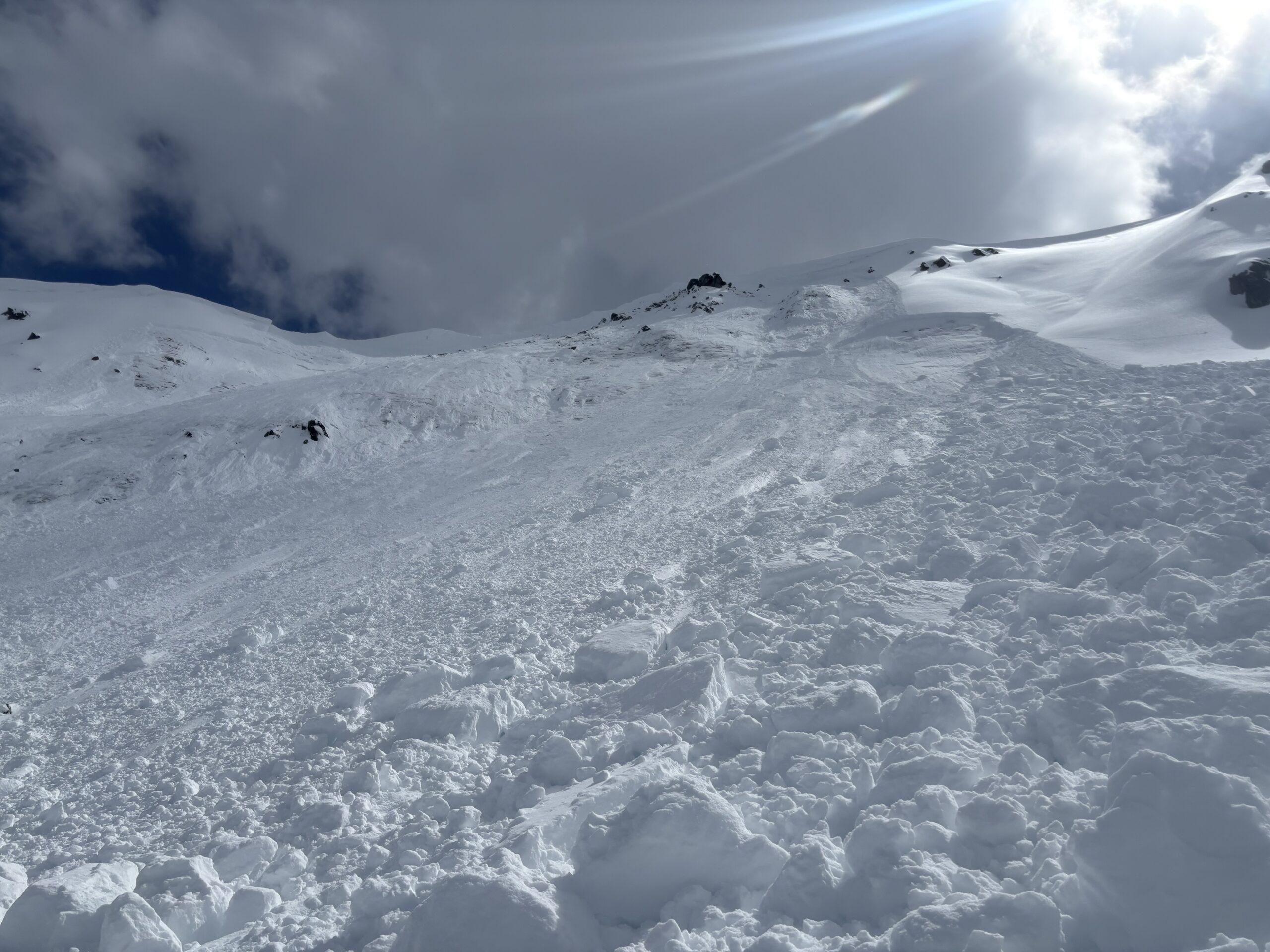
A group of three skiers triggered a large piece of cornice while traversing a ridgeline near Skyscraper Peak near Hatcher Pass. The cornice fall triggered a subsequent avalanche on the slope below. Two of the skiers fell with the cornice and were caught in the subsequent avalanche. One skier was partially buried up to their waist. Neither skier experienced any injuries. The cornice-triggered avalanche was approximately 3-5 ft deep and 250 ft wide, running approximately 450 vertical feet. The skier remaining on the ridge collected gear and descended the bed surface to assist the others in extricating themselves from the debris.
Avalanche Information
Type: Hard Slab
Problem/Character: Persistent Slab
Crown Depth: 4′
Width: 250’
Vertical Run: 450’’
Trigger: Unintentional Cornice Trigger
Aspect: Northwest
Elevation: 4450 ft
Slope Characteristics: Craggy bowl, crown in rocky terrain. Scree and tundra in open slide path.
Code: HS-ASu-R3-D2-O/G
Weak Layer: Faceted snow near the ground.
Backcountry Avalanche Forecast
The Hatcher Pass Avalanche Center finished regular advisories on April 26, with a hazard rating of CONSIDERABLE for WET SLAB avalanches above 2500 ft. The most recent General Information advisory published on 4/27 communicated an “assortment of avalanche problems” including cornice fall, deep and unmanageable persistent instabilities, and avalanches capable of remote trigger, likely to be unsurvivable.
4/27 General Information / 4/26 Hazard Advisory
Weather and Snowpack Summary
In the week preceding the accident, Hatcher Pass experienced its most impactful weather of the season. A prolonged storm of heavy snow and rain overloaded a thin, weak, and drought-ridden snowpack. In the weeks leading up to this cycle, NRDC had recorded some of the lowest-ever snow totals in Hatcher Pass’s recorded history. The season’s snowpack was thin, faceted, weak, and stale.
Between April 15th and 37th, Independence Mine SNOTEL registered 45 inches of snow and 5.6 inches of snow water equivalent. The storm was accompanied by periods of strong SE winds, with gusts into the 40’s and 50’s measured on Marmot and Hatch Peaks, respectively.
This snow overloaded the thin, weak snowpack, resulting in the largest avalanche cycle of the season, with avalanches failing near the ground on numerous aspects and running into low elevations.
The day of the accident was cold and clear, and a significant amount of moisture had evaporated from the upper snowpack overnight, leaving riding conditions improved and the snowpack more upright.
After the avalanche, a hasty profile was completed along its flank. Weak faceted snow was observed near the ground but no results from snowpit tests were observed on this layer. Stability tests in other locations revealed stubborn results in the upper snowpack and weak snow near the ground. After the event, the party agreed that activity on these layers was unlikely to be triggered from ski or snowmachine travel alone, and would require the substantial weight of a cornice fall to release.
Accident Summary
A team of three avalanche professionals departed Independence Mine Bowl on snowmachines the morning of April 29th. Their goal was to observe recent avalanche activity, assess current conditions, and hopefully make some turns in the copious amounts of new snow.
They traveled to the west side of the pass on snowmachines and spent about an hour investigating recent activity, traversing test slopes, and exploring newly opened terrain.
The party regrouped and agreed to climb towards Skyscraper Ridge, where they would leave their snowmachines and depart on skis along the ridge. The run they had chosen was adjacent to where they were able to gain the ridge by snowmachine.
After gaining the ridge and parking snowmachines, the party traversed the ridgeline, with two skiers sidestepping and herringboning, and the third traveling on foot with a snowboard strapped to his pack. They gained a small rise that gave them visibility of the run below and investigated an entrance onto the slope. Large cornices were observed, and the party acknowledged them and made an effort to keep distance when investigating the slope.
The team agreed on an entrance plan and retreated from the rise and made their way down the ridge, they immediately triggered a large section of cornice and two of the party fell onto the slope along with it. The large cornice triggered an avalanche on the slope, roughly 3-5 ft deep, 250 ft wide, and running about 450 ft. In places, the avalanche failed on the ground.
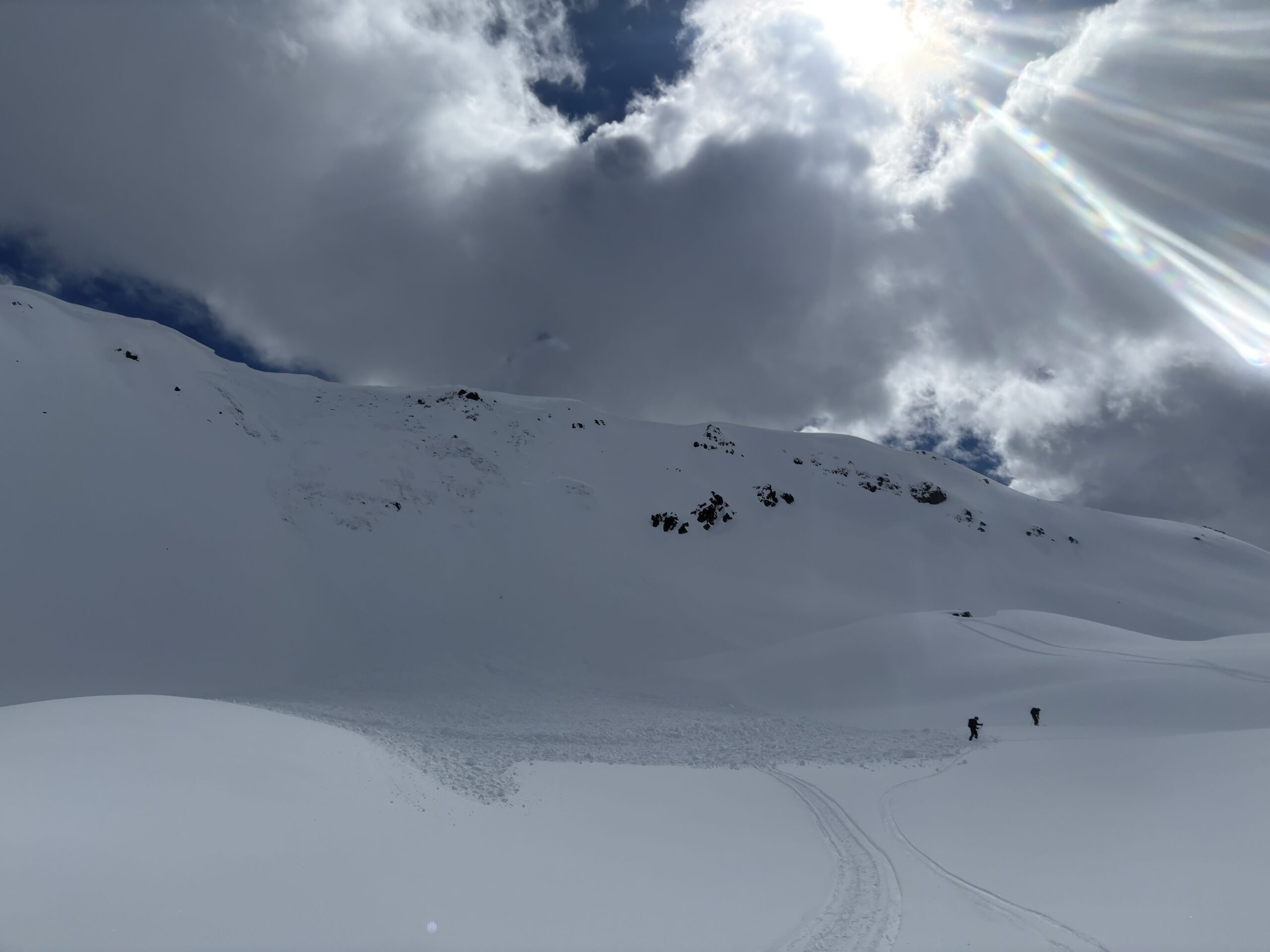
The two skiers who fell onto the slope were caught in this avalanche and carried to the bottom of the slope. The two came to rest near the top of the deposition zone, with one skier remaining upright with skis on their feet, and the snowboarder buried up to their waist.
The skier remaining on the ridge made an effort to communicate with the other two, observed them both on the surface and moving, and quickly descended the bed surface to assist them if necessary.
The two skiers worked to extricate the snowboarder buried to his waist and a collective sense of shock and awe was shared.
The skier remaining on the ridge re-ascended the slope to collect a remaining pole, and performed a hasty profile along the flank. The party reconvened at their snowmachines and departed back to the trailhead.
Observation from the party that day.
Thank you to the people involved for sharing information to help compile this report.