Hatcher Pass
|
 Archives
|
 The Bottom Line
It will be likely to human trigger 4-6″ thick wind slabs on SOUTH to WEST aspects at upper elevation on slopes 35º and steeper. Small natural avalanches will be possible at upper elevation.
It will be possible to human trigger 1-3′ deep persistent slabs on all aspects, at all elevations, on slopes 30º and steeper.
Remotely triggering an avalanche is possible today.
 Special Announcements
Our cabin fever reliever has been cancelled.
From now until February 15th the HPAC Board of Directors will be matching community and business donations up to $7,500. Please consider contributing to our matching donation online fundraising campaign, live now!
Head over to Backcountry Bike and Ski to find new HPAC swag including our original HPAC ballcaps, new skool ballcaps, and skida buffs. Don’t miss out!


 |
|
|
 |
 |
|
| Travel Advice | Generally safe avalanche conditions. Watch for unstable snow on isolated terrain features. | Heightened avalanche conditions on specific terrain features. Evaluate snow and terrain carefully; identify features of concern. | Dangerous avalanche conditions. Careful snowpack evaluation, cautious route-finding, and conservative decision-making essential. | Very dangerous avalanche conditions. Travel in avalanche terrain not recommended. | Extraordinarily dangerous avalanche conditions. Avoid all avalanche terrain. |
| Likelihood of Avalanches | Natural and human-triggered avalanches unlikely. | Natural avalanches unlikely; human-triggered avalanches possible. | Natural avalanches possible; human-triggered avalanches likely. | Natural avalanches likely; human-triggered avalanches very likely. | Natural and human-triggered avalanches certain. |
| Avalanche Size and Distribution | Small avalanches in isolated areas or extreme terrain. | Small avalanches in specific areas; or large avalanches in isolated areas. | Small avalanches in many areas; or large avalanches in specific areas; or very large avalanches in isolated areas. | Large avalanches in many areas; or very large avalanches in specific areas. | Very large avalanches in many areas. |
No recent avalanches have been observed since Tuesday.
For more info on recent avalanches this week:
| Signal Word | Size (D scale) | Simple Descriptor |
| Small | 1 | Unlikely to bury a person |
| Large | 2 | Can bury a person |
| Very Large | 3 | Can destroy a house |
| Historic | 4 & 5 | Can destroy part or all of a village |
4-6″ thick wind slabs will be likely to human trigger on south to west aspects at upper elevation on slopes 35º and steeper.
Small natural avalanches are possible.
Winds gusted ENE 22 to 30mph for 16 hours on Friday/Saturday morning transporting low density snow, building wind slabs on south to west aspects. We believe the winds were stronger than reported on Marmot weather station.
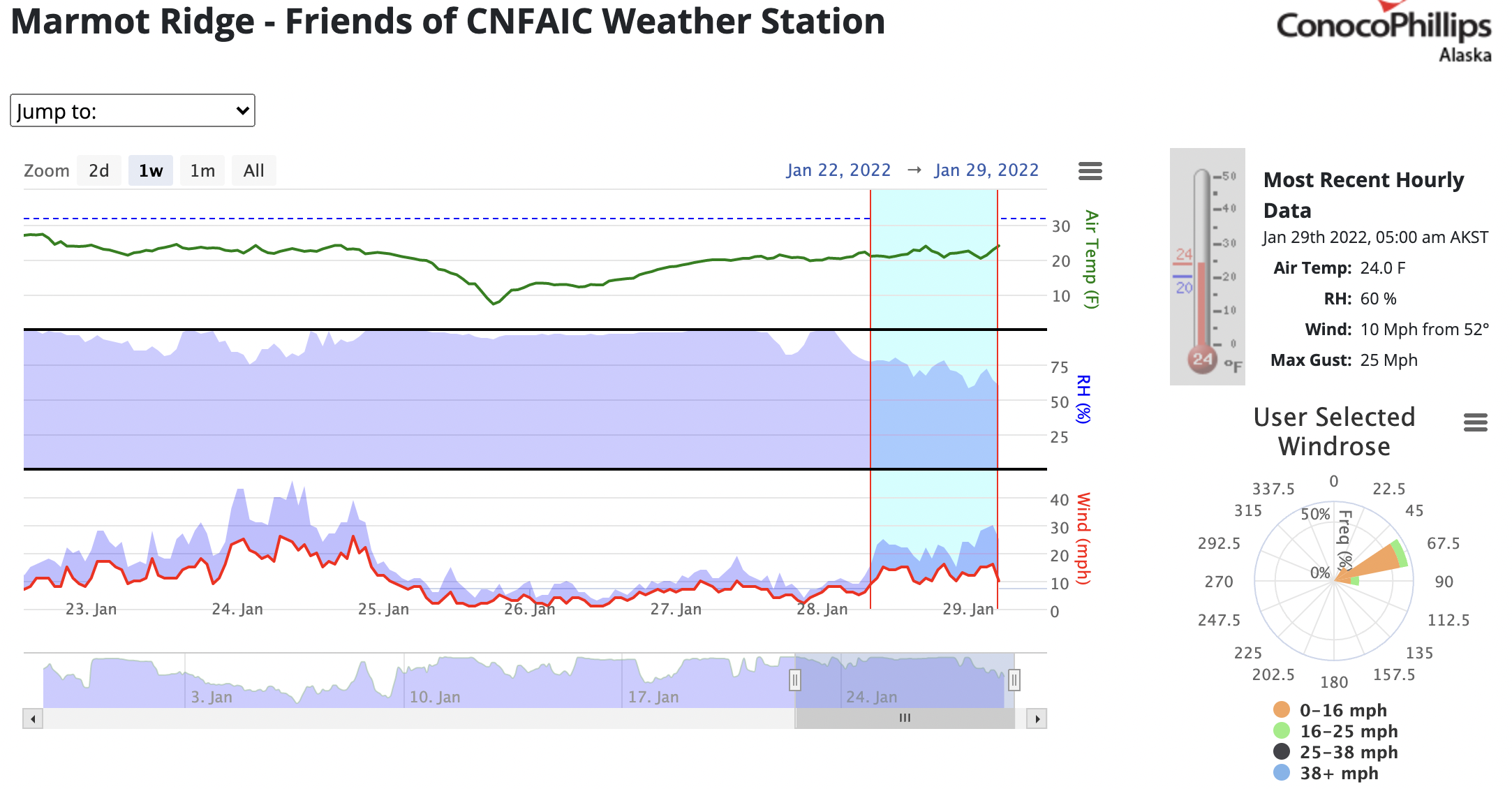
It will be possible for wind slabs to step down into the persistent slab, increasing the size and consequence of an avalanche.
Wind slabs will be easy to identify. Look for hard snow sitting over weaker snow, smooth and rounded or lens shaped features. Shooting cracks or whumping are signs of instability and indicators of this avalanche problem.
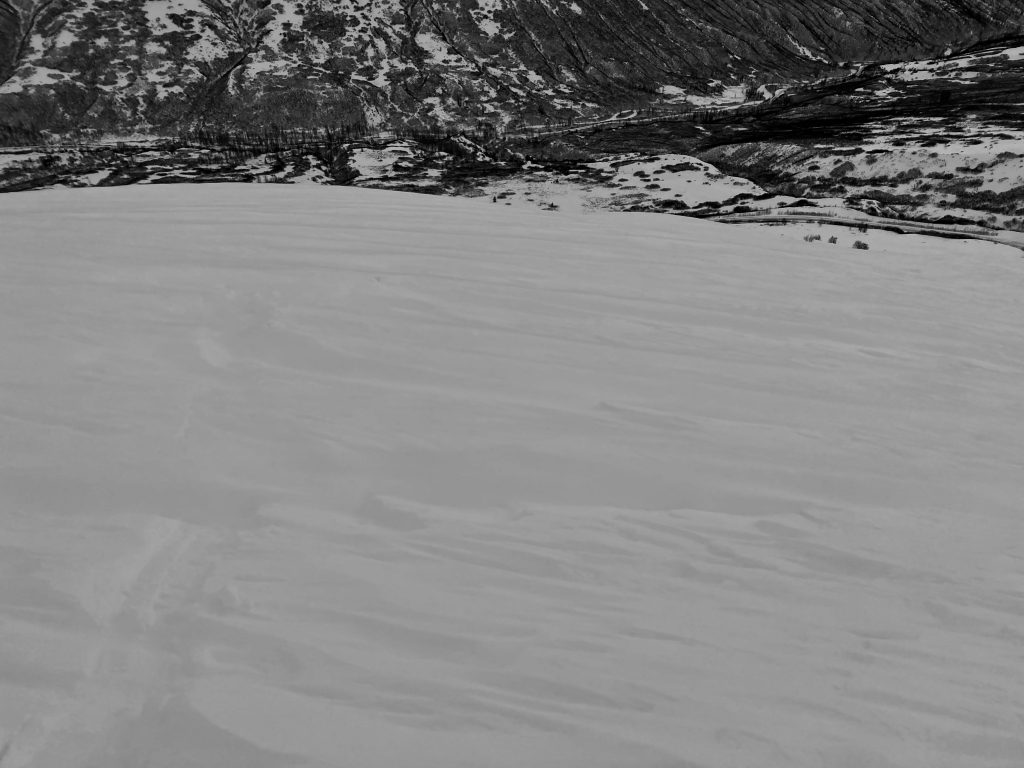
Wind effected snow mid day on Friday. Marmot S aspect.
Expect the wind slab problem to improve within 24-48 hours after winds subside.
If you head into avalanche terrain today, utilize strict safety travel protocols, travel one at a time from safe zone to safe zone, only have one person on slope at a time, ensure all members of your party are carrying and know how to use beacons, shovels and probes, and avoid slopes with terrain traps.
| Signal Word | Size (D scale) | Simple Descriptor |
| Small | 1 | Unlikely to bury a person |
| Large | 2 | Can bury a person |
| Very Large | 3 | Can destroy a house |
| Historic | 4 & 5 | Can destroy part or all of a village |
Persistent slabs 1 to 3 feet deep will be possible to human trigger on all aspects, at all elevations, on slopes 30º and steeper today.
A higher potential exists for triggering avalanches where the slab or snowpack is thinner on SE, S, SW aspects and on the Willow side of Hatcher Pass.
Remotely triggering a persistent slab avalanche will be possible.
Natural avalanches are unlikely.
The majority of avalanches we have observed over the past month have failed on weak sugary snow sitting on top of the Dec 26 rain crust. We have also seen many avalanches fail (or step down) into the old weak sugary snow (facets) from Oct/Nov at the ground.
A snowmachiner remotely triggered a large avalanche on Tuesday. The combination of a thinner snowpack and the force of a snowmachine was enough to trigger this avalanche.
Poor structure is widespread in the snowpack. With every storm or loading event (wind) expect to see more avalanche activity failing on the Dec 26 rain crust and Oct/Nov facets. These weak layers are very slow to heal and will likely be with us the entire season.
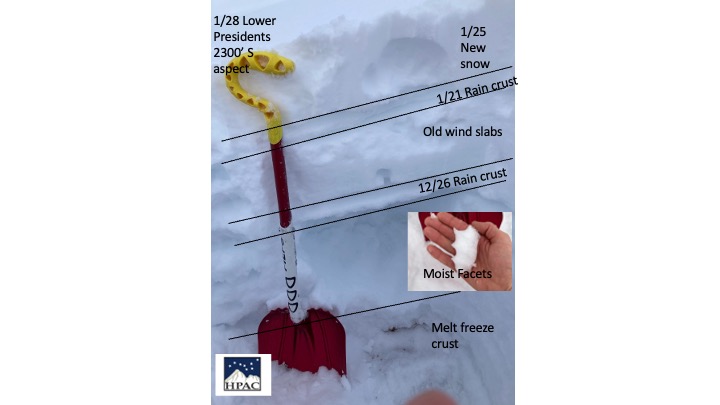
1/28 Poor structure at Low elevation 2300ft. S aspect
Lower Presidents
To identify this avalanche problem and areas with poor structure use pole/probes and formal stability tests. Whumping and shooting cracks are red flags for this avalanche problem but may NOT occur prior to an avalanche being triggered.