Hatcher Pass
|
 Archives
|
 The Bottom Line
This weeks Valentines Storm brought 50″ of snow and 8″ of water to Hatcher Pass! We not only reached 100″ on the Marmot snowstake but buried it. We have seen large and very large avalanches hit the lower road.
Large to very large avalanches will be likely to human trigger today on all aspects, at all elevations, on slopes above 30°. Natural avalanches are possible.
Forecasters will gather information as soon as today.
Continue to use safe travel protocol to increase your margin of safety when traveling in avalanche terrain.
The road remains closed at mile 11. It will be possible for avalanches to hit the lower road between the canyon and mile 11.

 |
 |
|
 |
 |
|
| Travel Advice | Generally safe avalanche conditions. Watch for unstable snow on isolated terrain features. | Heightened avalanche conditions on specific terrain features. Evaluate snow and terrain carefully; identify features of concern. | Dangerous avalanche conditions. Careful snowpack evaluation, cautious route-finding, and conservative decision-making essential. | Very dangerous avalanche conditions. Travel in avalanche terrain not recommended. | Extraordinarily dangerous avalanche conditions. Avoid all avalanche terrain. |
| Likelihood of Avalanches | Natural and human-triggered avalanches unlikely. | Natural avalanches unlikely; human-triggered avalanches possible. | Natural avalanches possible; human-triggered avalanches likely. | Natural avalanches likely; human-triggered avalanches very likely. | Natural and human-triggered avalanches certain. |
| Avalanche Size and Distribution | Small avalanches in isolated areas or extreme terrain. | Small avalanches in specific areas; or large avalanches in isolated areas. | Small avalanches in many areas; or large avalanches in specific areas; or very large avalanches in isolated areas. | Large avalanches in many areas; or very large avalanches in specific areas. | Very large avalanches in many areas. |
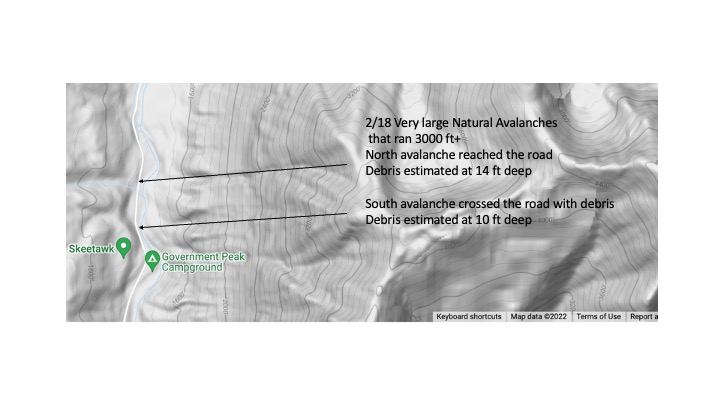
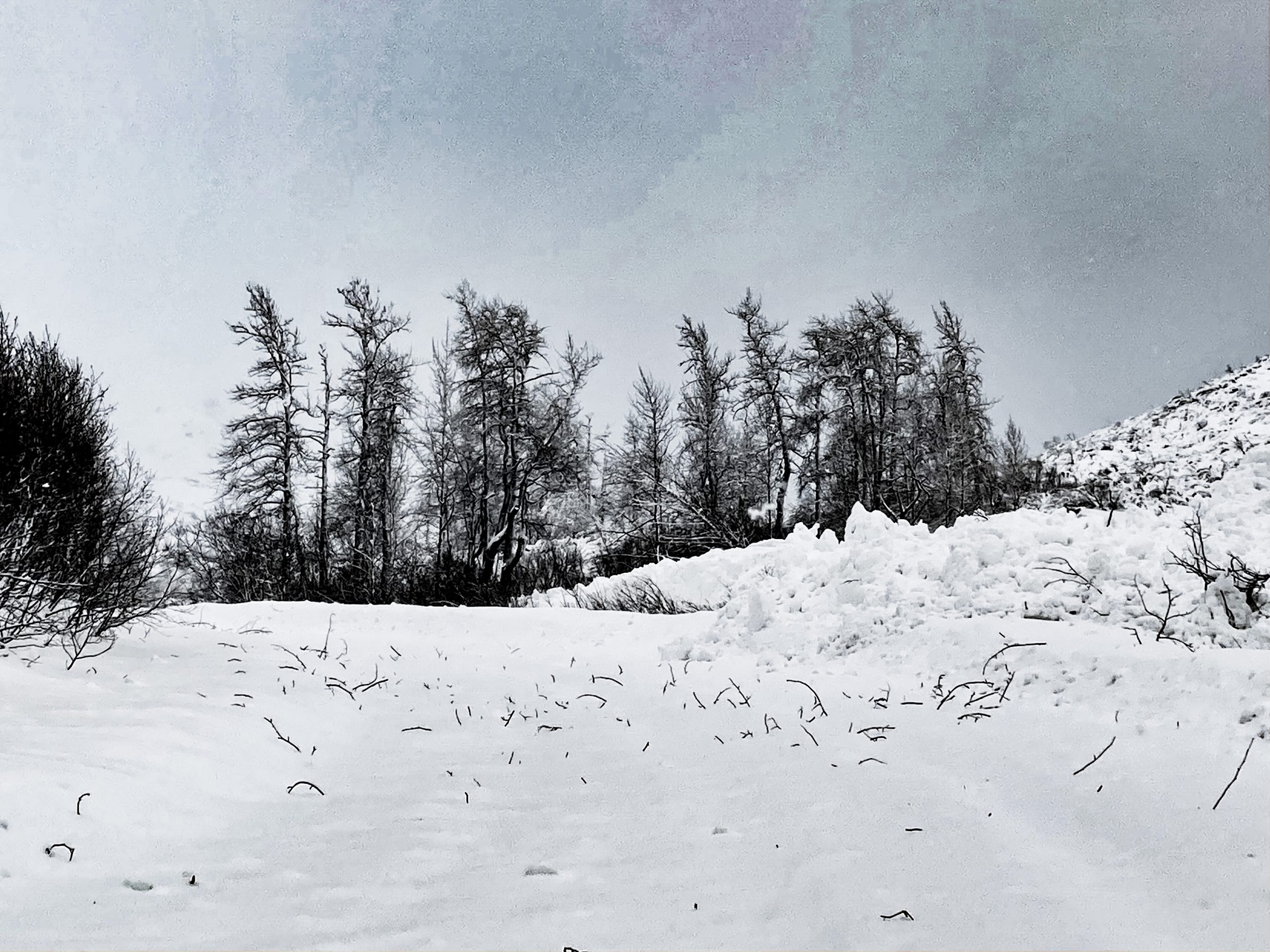
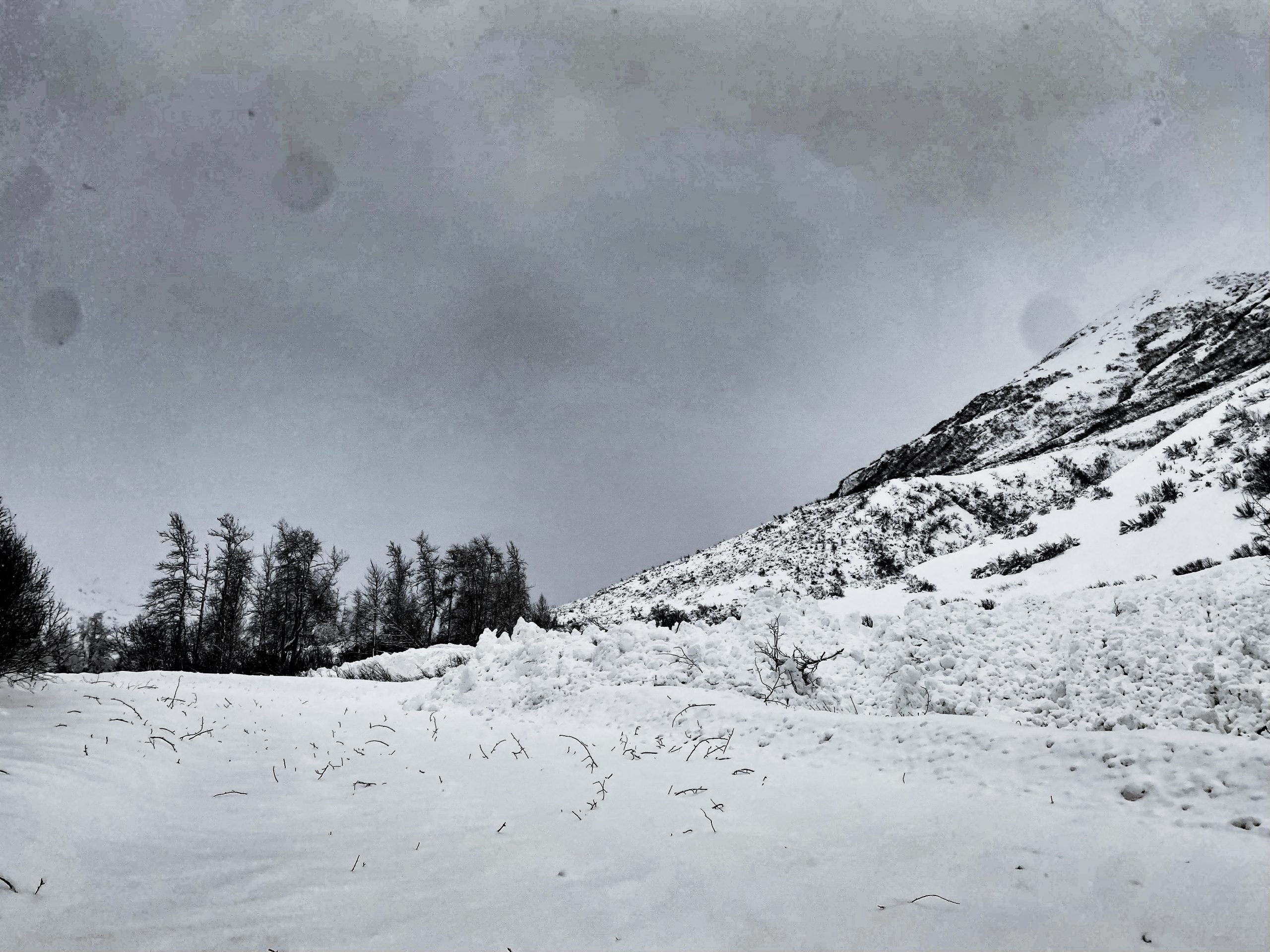
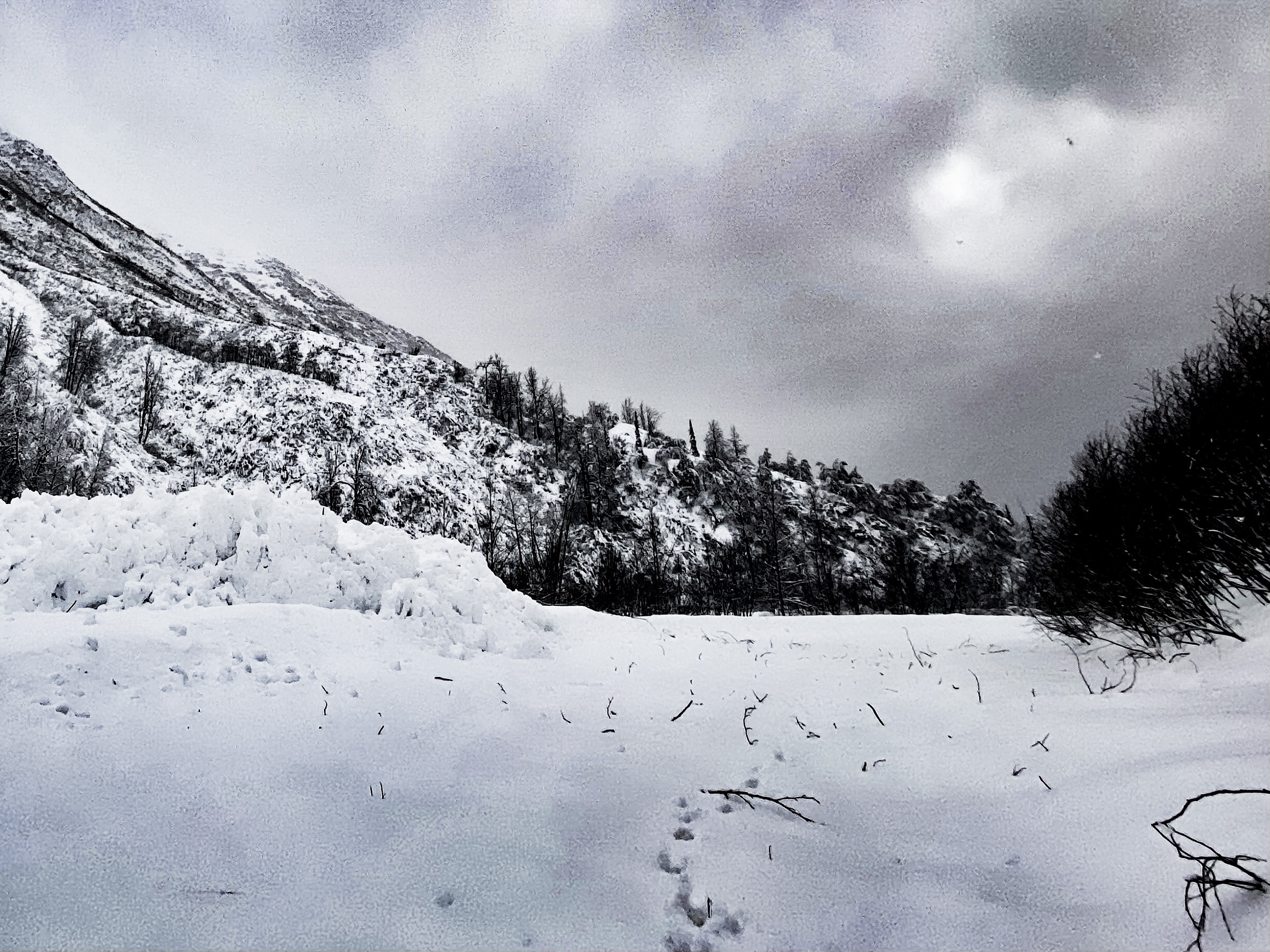
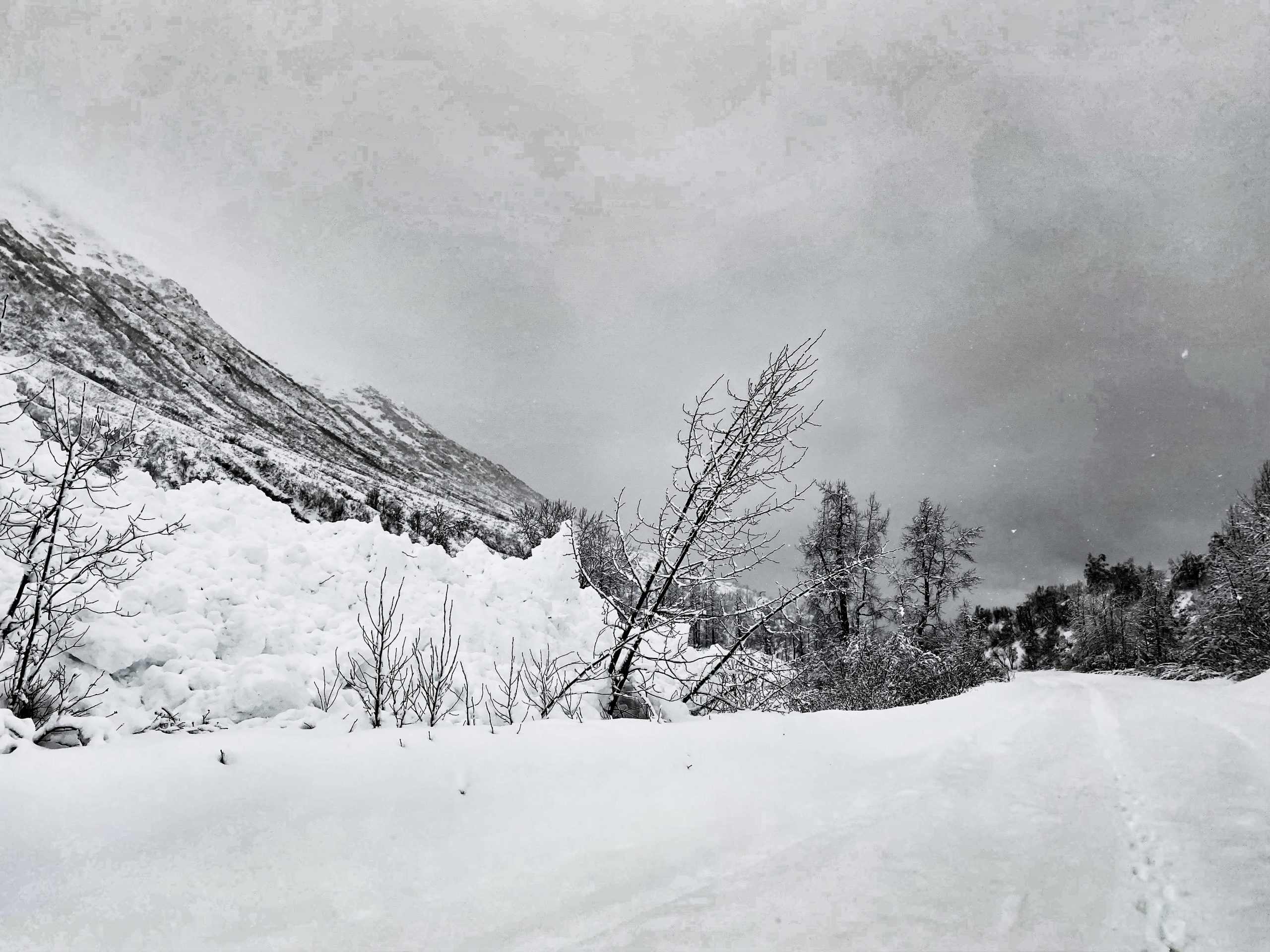
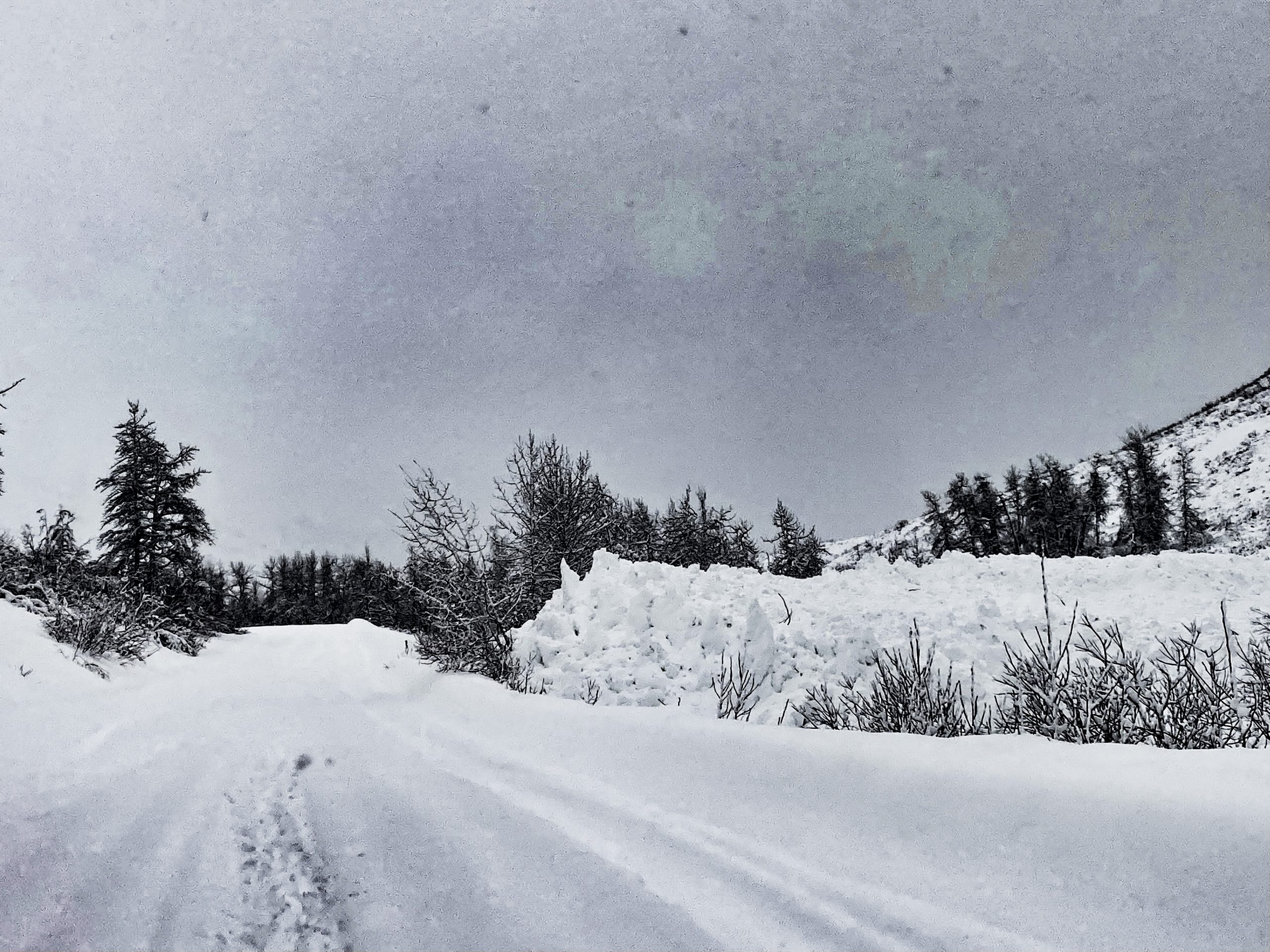
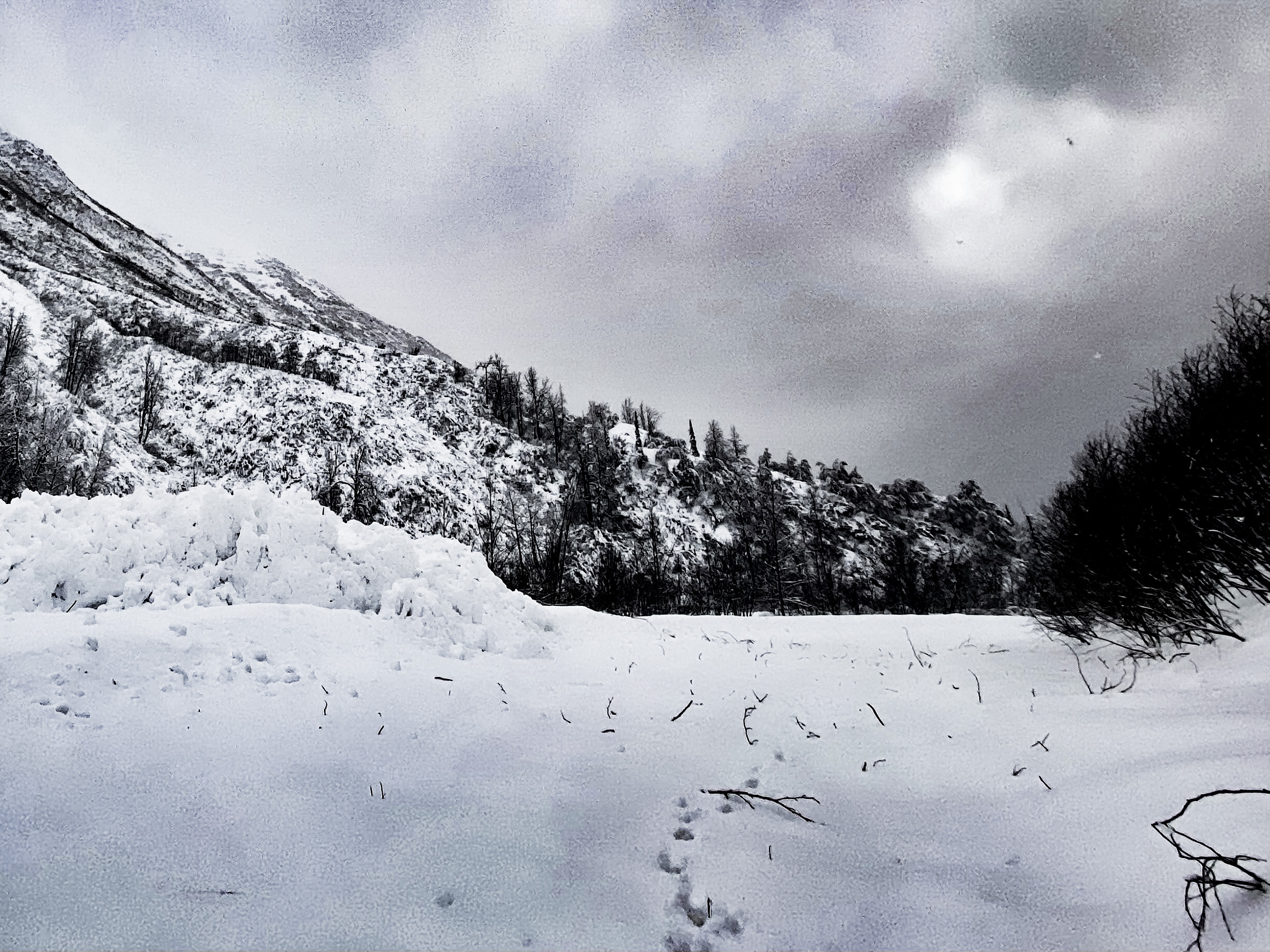
Two very large natural avalanches avalanches were observed on Friday just above mile 11 near Arkose ridge and crossed the Little Su. The debris from the one to the north stopped at the road. The debris from the south one was on the road. Good thing the road was closed!
These avalanches are not the exception but rather what we expect to see in many more locations as a result of this storm. We will keep you updated as we discover more avalanches.
Below are pictures of the two different avalanches that reached the road and partially crossed the road.
| Signal Word | Size (D scale) | Simple Descriptor |
| Small | 1 | Unlikely to bury a person |
| Large | 2 | Can bury a person |
| Very Large | 3 | Can destroy a house |
| Historic | 4 & 5 | Can destroy part or all of a village |
This weeks storm has buried our loathed weak layers from Dec 26 and Nov facets much deeper in the snowpack. We are now dealing with a deep slab problem.
It will be likely to human trigger a 2 to 4 ft deep, large to very large deep persistent slab on all aspects, at mid and upper elevation, on slopes above 30°.
Deep slabs are inherently more stubborn to trigger because of the depth of the weak layer but carry significantly more consequence.
This problem can be unpredictable and give infrequent feedback. Human triggering will be possible days or weeks after a storm.
It will be possible to remotely trigger an avalanche from flat or adjacent terrain. Expect these avalanches to have an unusually wide propagation.
Expect test result to be inconclusive with this avalanche problem.
The avalanches that hit the lower road were large enough to bury or destroy a car.
The video below shows two different natural avalanches that occurred on Friday.
| Signal Word | Size (D scale) | Simple Descriptor |
| Small | 1 | Unlikely to bury a person |
| Large | 2 | Can bury a person |
| Very Large | 3 | Can destroy a house |
| Historic | 4 & 5 | Can destroy part or all of a village |
Persistent slabs 1 to 3 feet deep will be likely to human trigger on all aspects, at low elevation on slopes steeper than 30°. Natural avalanches will be possible.
The good news is that low elevation has a shallower snowpack . The bad news is that it doesn’t really matter because the structure is poor. Low elevation received less snow during this weeks storm but significant avalanches problems still exist.
| Signal Word | Size (D scale) | Simple Descriptor |
| Small | 1 | Unlikely to bury a person |
| Large | 2 | Can bury a person |
| Very Large | 3 | Can destroy a house |
| Historic | 4 & 5 | Can destroy part or all of a village |
Storm slabs up to 2 feet deep will be possible to human trigger at all elevations on aspects, on slopes above 35º today. Natural avalanches will be possible.
Storm Slabs are a short lived problem and will begin to heal within 24-48 hours.
It will be possible for storm slabs to step down into the persistent slab, increasing the size and consequence of an avalanche.