Hatcher Pass
|
 Archives
|
 The Bottom Line
The avalanche danger is LOW today.
Human triggered and natural avalanches are unlikely.
Freezing temperatures overnight will keep snow surfaces firm until late in the day.
Conditions include firm old wind slabs, sun-crusts, and sastrugi on many slopes. Low density snow can be found above 3000’ in protected north facing locations.

| |
 |
 |
 |
 |
|
| Travel Advice | Generally safe avalanche conditions. Watch for unstable snow on isolated terrain features. | Heightened avalanche conditions on specific terrain features. Evaluate snow and terrain carefully; identify features of concern. | Dangerous avalanche conditions. Careful snowpack evaluation, cautious route-finding, and conservative decision-making essential. | Very dangerous avalanche conditions. Travel in avalanche terrain not recommended. | Extraordinarily dangerous avalanche conditions. Avoid all avalanche terrain. |
| Likelihood of Avalanches | Natural and human-triggered avalanches unlikely. | Natural avalanches unlikely; human-triggered avalanches possible. | Natural avalanches possible; human-triggered avalanches likely. | Natural avalanches likely; human-triggered avalanches very likely. | Natural and human-triggered avalanches certain. |
| Avalanche Size and Distribution | Small avalanches in isolated areas or extreme terrain. | Small avalanches in specific areas; or large avalanches in isolated areas. | Small avalanches in many areas; or large avalanches in specific areas; or very large avalanches in isolated areas. | Large avalanches in many areas; or very large avalanches in specific areas. | Very large avalanches in many areas. |
No recent slab avalanches have been observed or reported this week.
Some small natural loose wet avalanches were observed on southerlies earlier it the week.
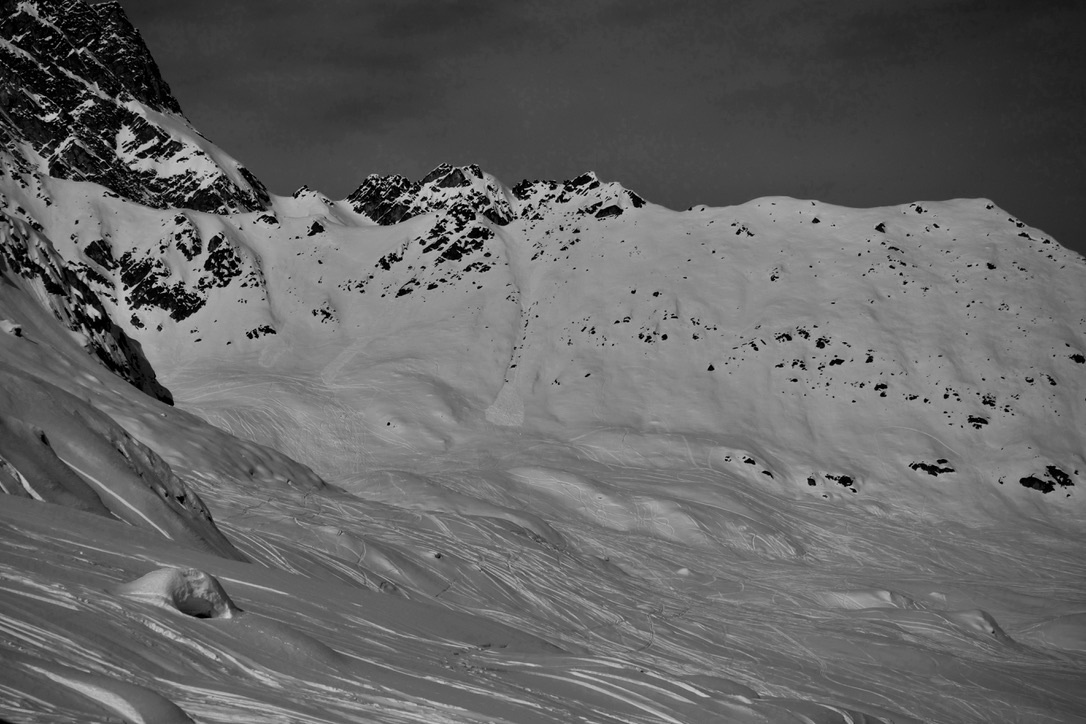
Loose wet avalanches from earlier in the week. Didilkama Mountain. 4/1
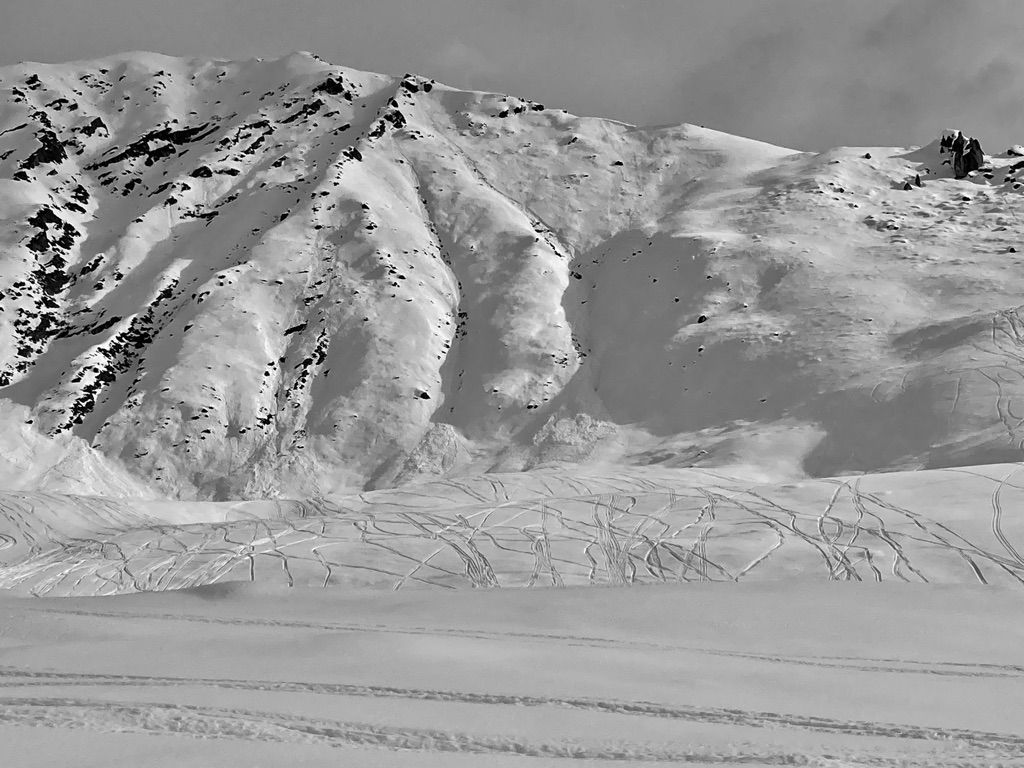
4.1 Loose wet avalanches from earlier in the week. Sydney Creek
| Signal Word | Size (D scale) | Simple Descriptor |
| Small | 1 | Unlikely to bury a person |
| Large | 2 | Can bury a person |
| Very Large | 3 | Can destroy a house |
| Historic | 4 & 5 | Can destroy part or all of a village |
We are in a holding pattern with avalanche problems at the moment. There is still a ton of snow, 7 feet or more in many locations at Hatcher Pass. Over night temps once again allowed the snow surface to freeze solid. Temperatures have been warming up considerably in the afternoon, especially below 2500′.
Avalanche danger is LOW today, human triggered and natural avalanches are unlikely.
Normal caution also means that it is possible to see small isolated wet loose avalanche activity, mostly on southerly aspects, at low elevation, in the afternoon on steep slopes above 35°.
Until we see several nights without freezing temps, we do not anticipate a wet slab cycle. Wet slabs are a more concerning and consequential avalanche problem compared to wet loose and can be hard to predict.
Few people have been getting out in the backcountry this week. Conditions are improving and timing is everything! Northerlies still harness powder in protected locations at upper elevation, and S and SW aspects have sun softened surfaces in the afternoon.
Get out and enjoy it and send us your observations.
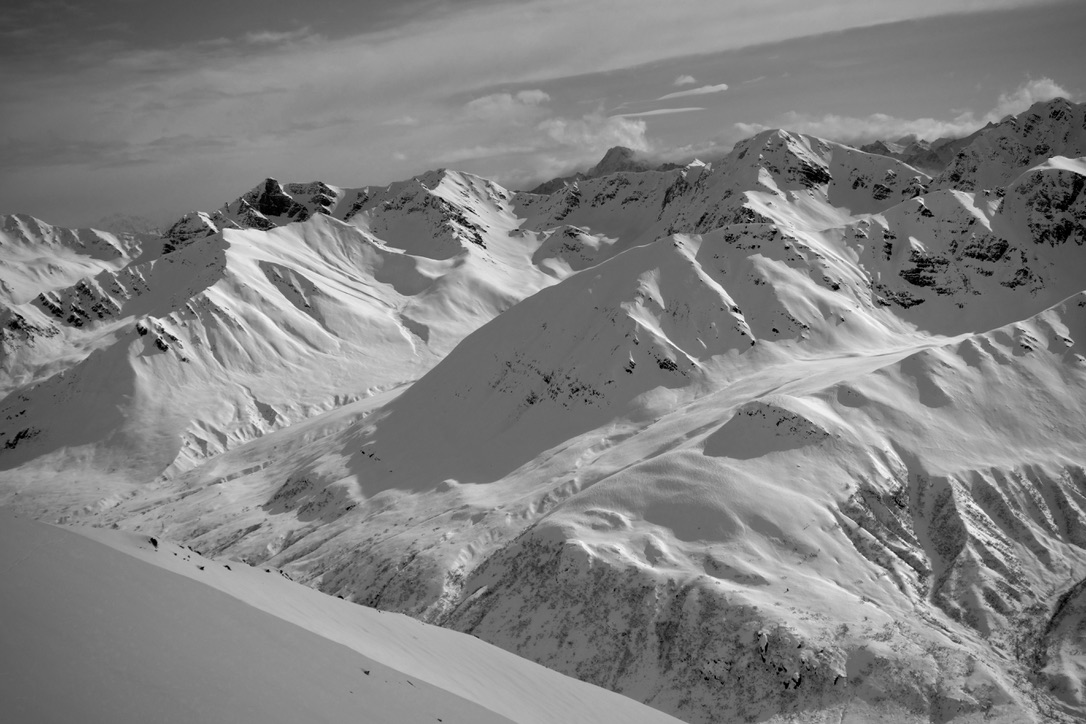
4/1 Conditions in Delia Creek, Two Lakes and up the Mint Valley are improving!
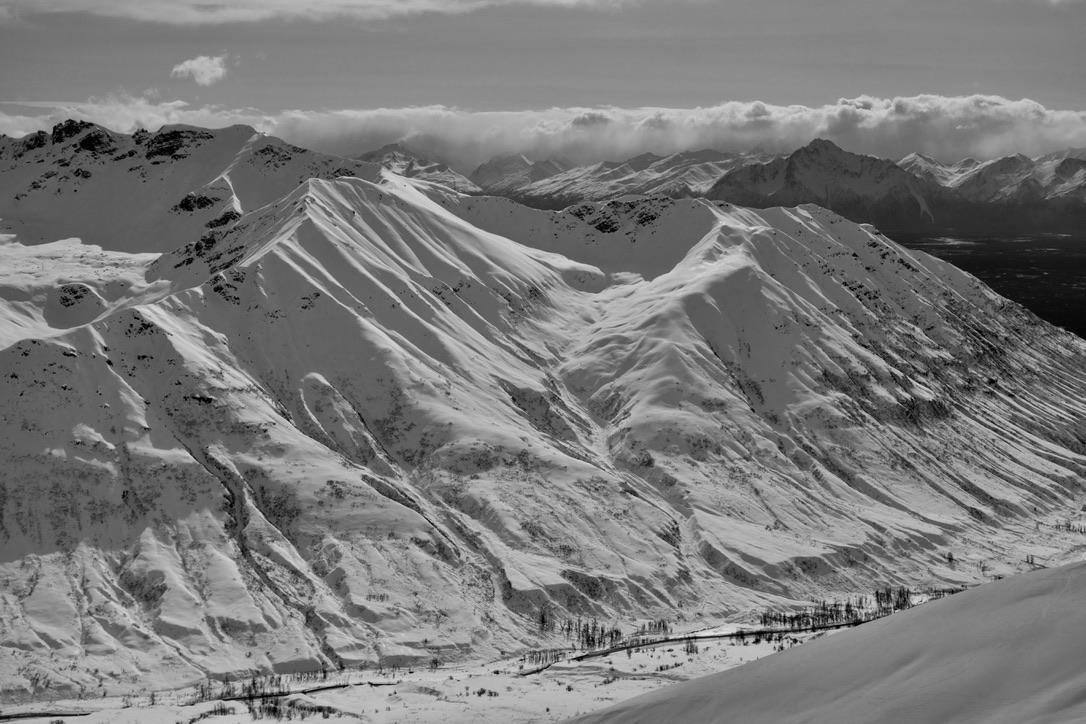
4/1 Lots of snow in the Punk Spines and on Stairstep.
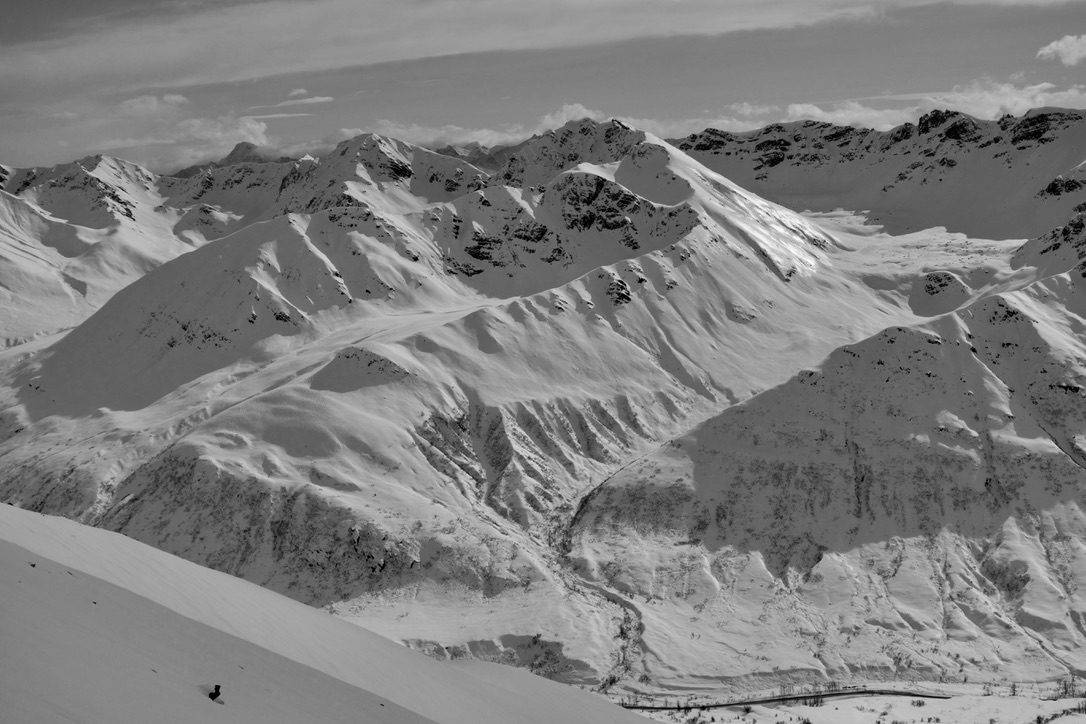
4/1 Shimmering crusts from Feb 26 still exist in specific locations. Delia Creek
It’s hard to believe it’s April already. As spring temperatures continue to warm up keep an eye out for these avalanche problems in the next several weeks: