Hatcher Pass
|
 Archives
|
 The Bottom Line
Strong winds and new snow have overloaded a weak snowpack overnight.
Natural, human-triggered, and remotely triggered avalanches are likely today in specific areas at the mid and upper elevations.
Human-triggered avalanches may be possible at lower elevations.
Any avalanche triggered has the potential for failing at the ground and releasing the entire snowpack. While coverage is generally shallow, there is still enough snow in specific areas to result in a large avalanche capable of injuring, burying, or killing a person.
Both snow and winds should be tapering off today. Give our weak snowpack a chance to adjust to the new load, and be extremely careful and conservative if headed into the backcountry today.
 Special Announcements
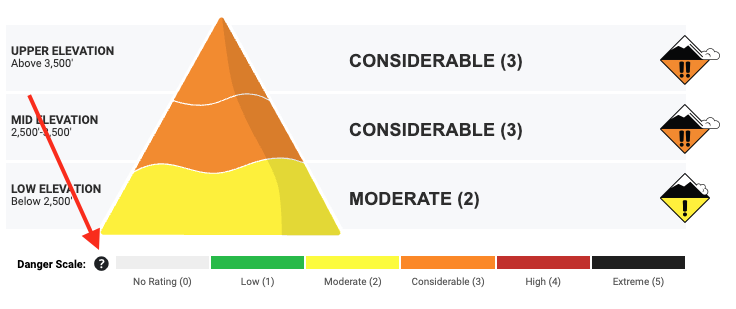
It’s the second avalanche advisory of the season. Do you remember how the danger scale works? Click on the question mark for a great reminder!


 |
|
|
 |
 |
|
| Travel Advice | Generally safe avalanche conditions. Watch for unstable snow on isolated terrain features. | Heightened avalanche conditions on specific terrain features. Evaluate snow and terrain carefully; identify features of concern. | Dangerous avalanche conditions. Careful snowpack evaluation, cautious route-finding, and conservative decision-making essential. | Very dangerous avalanche conditions. Travel in avalanche terrain not recommended. | Extraordinarily dangerous avalanche conditions. Avoid all avalanche terrain. |
| Likelihood of Avalanches | Natural and human-triggered avalanches unlikely. | Natural avalanches unlikely; human-triggered avalanches possible. | Natural avalanches possible; human-triggered avalanches likely. | Natural avalanches likely; human-triggered avalanches very likely. | Natural and human-triggered avalanches certain. |
| Avalanche Size and Distribution | Small avalanches in isolated areas or extreme terrain. | Small avalanches in specific areas; or large avalanches in isolated areas. | Small avalanches in many areas; or large avalanches in specific areas; or very large avalanches in isolated areas. | Large avalanches in many areas; or very large avalanches in specific areas. | Very large avalanches in many areas. |
| Signal Word | Size (D scale) | Simple Descriptor |
| Small | 1 | Unlikely to bury a person |
| Large | 2 | Can bury a person |
| Very Large | 3 | Can destroy a house |
| Historic | 4 & 5 | Can destroy part or all of a village |
The persistent weak layer responsible for the avalanche cycle on 11/7-8 has been re-activated by new snow and wind-transported snow overnight. As of 6:30 am IM Snotel reported 1.5″ of water, which equates to approximately 15″ of new snow.
Natural, human-triggered, and remotely triggered avalanches are likely today.
We expect to see small natural avalanches in many areas and large natural avalanches in specific areas at mid to upper elevations.
Large avalanches are expected on leeward slopes to previous and recent winds. Leeward slopes are generally West to North aspects where slabs could be 2-3 feet deep.
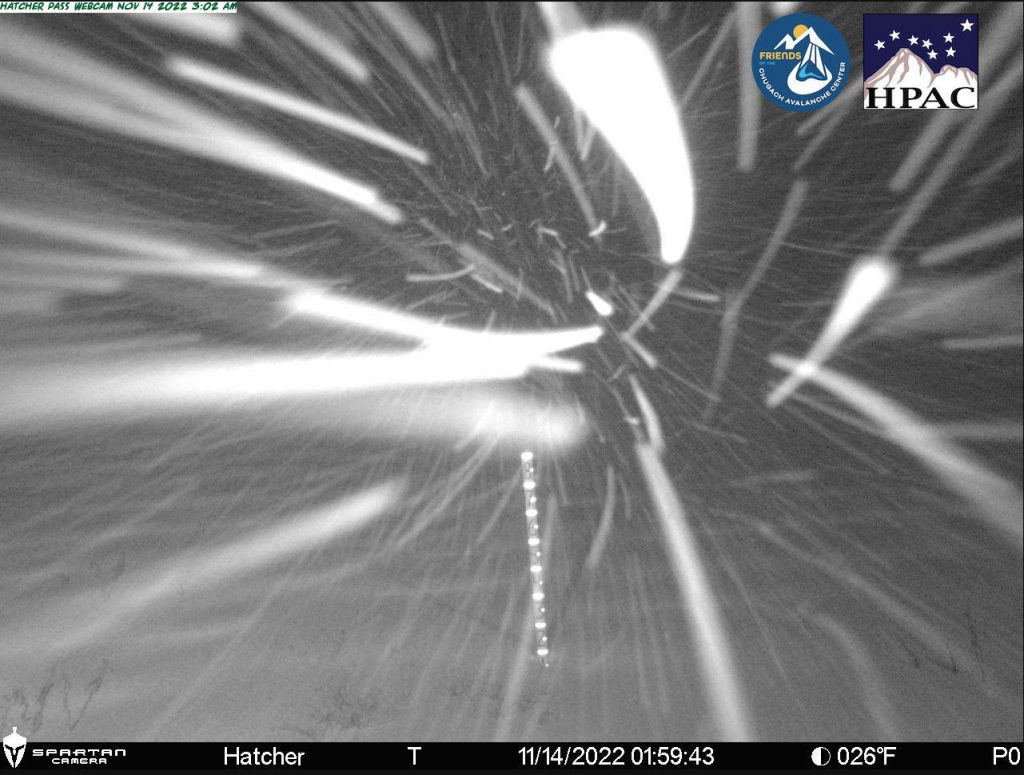
Both snow and winds should be tapering off today. Give our weak snowpack a chance to adjust to the new load, and be extremely careful and conservative if headed into the backcountry today.
| Signal Word | Size (D scale) | Simple Descriptor |
| Small | 1 | Unlikely to bury a person |
| Large | 2 | Can bury a person |
| Very Large | 3 | Can destroy a house |
| Historic | 4 & 5 | Can destroy part or all of a village |
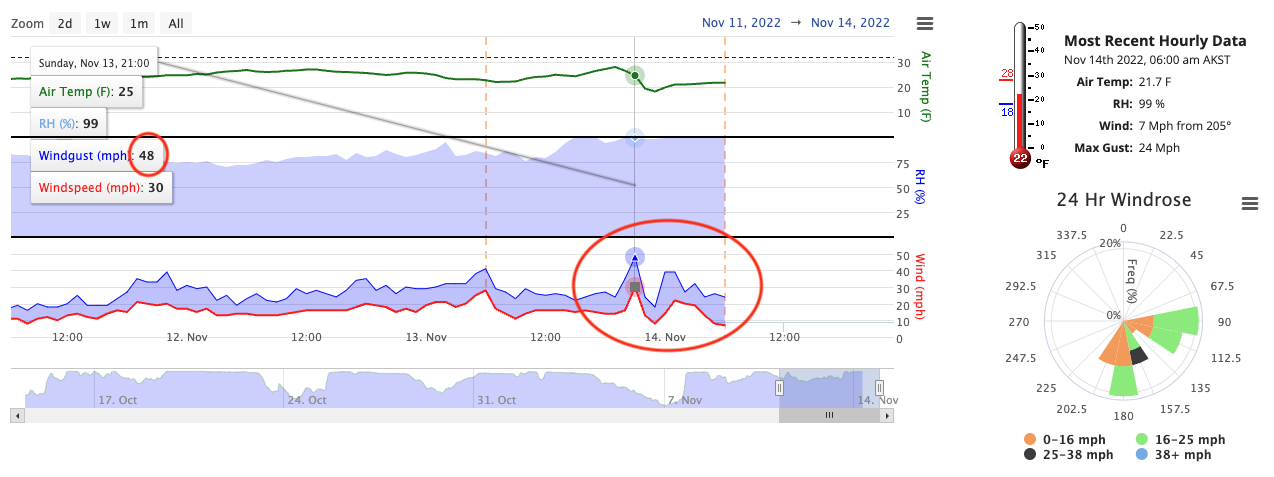
Winds from the East to the South were consistent and strong since 11/12. The max gust at 4500′ was 48 mph with winds sustained at 20-30 mph. Slabs could be 2-3 feet deep in specific locations.
These winds will have transported available snow onto West to North aspects. Wind slabs in these locations will be likely to human trigger and natural avalanches will be possible. Wind slabs may step down to the persistent slab and fail at the ground resulting in larger and more dangerous avalanches.
While storm slabs 10-15″ thick may be an issue today, the larger issue is the older fragile sugar snow at the base of the snowpack. Any avalanche triggered today may step down to the ground and result in a larger avalanche. See Persistent Slab above.