Hatcher Pass
|
 Archives
|
 |
Avalanche Warning
Issued: February 17, 2022 7:00 amTravel in avalanche terrain is not recommended. Avoid being on or beneath all steep slopes. |
 The Bottom Line
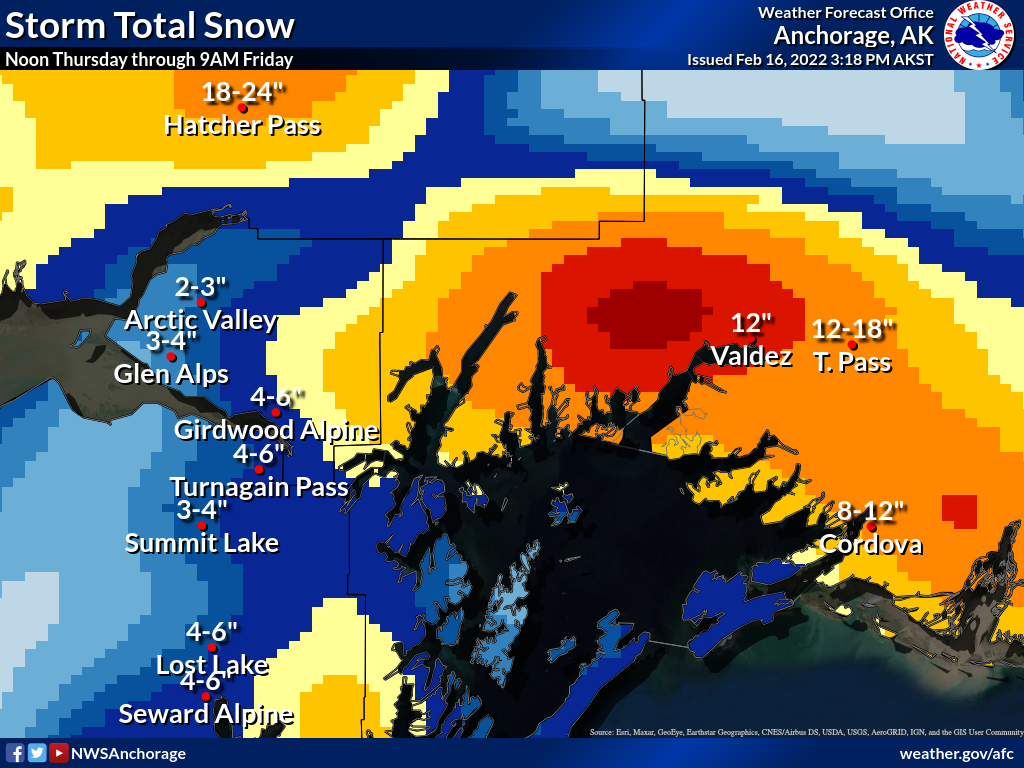
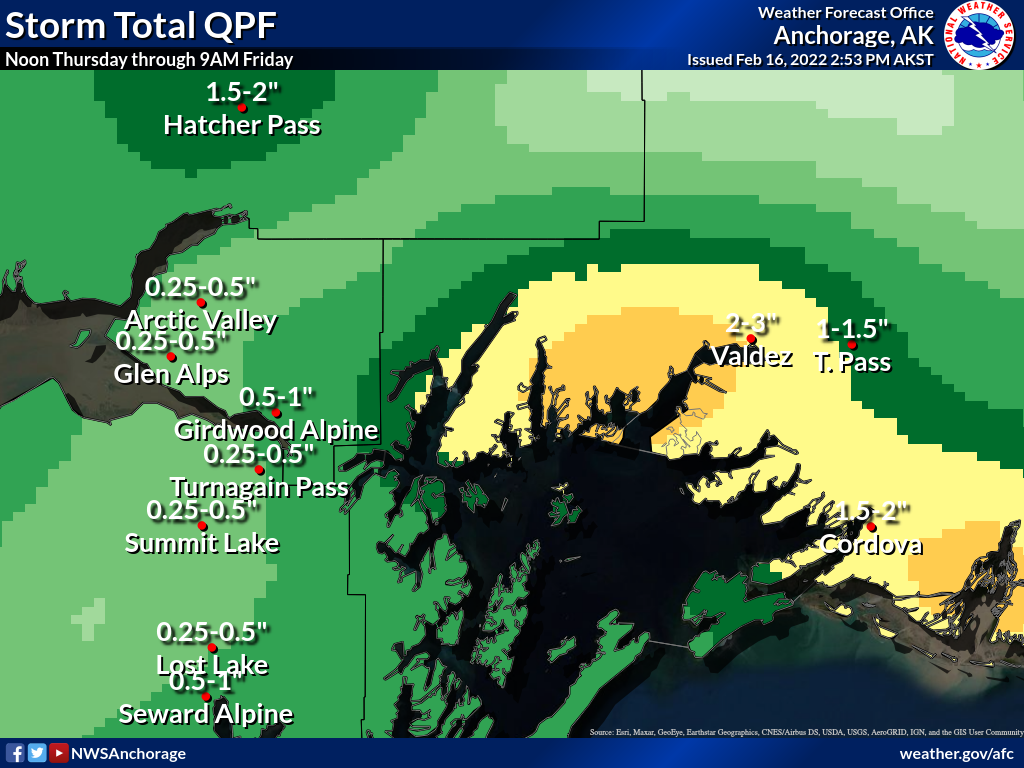
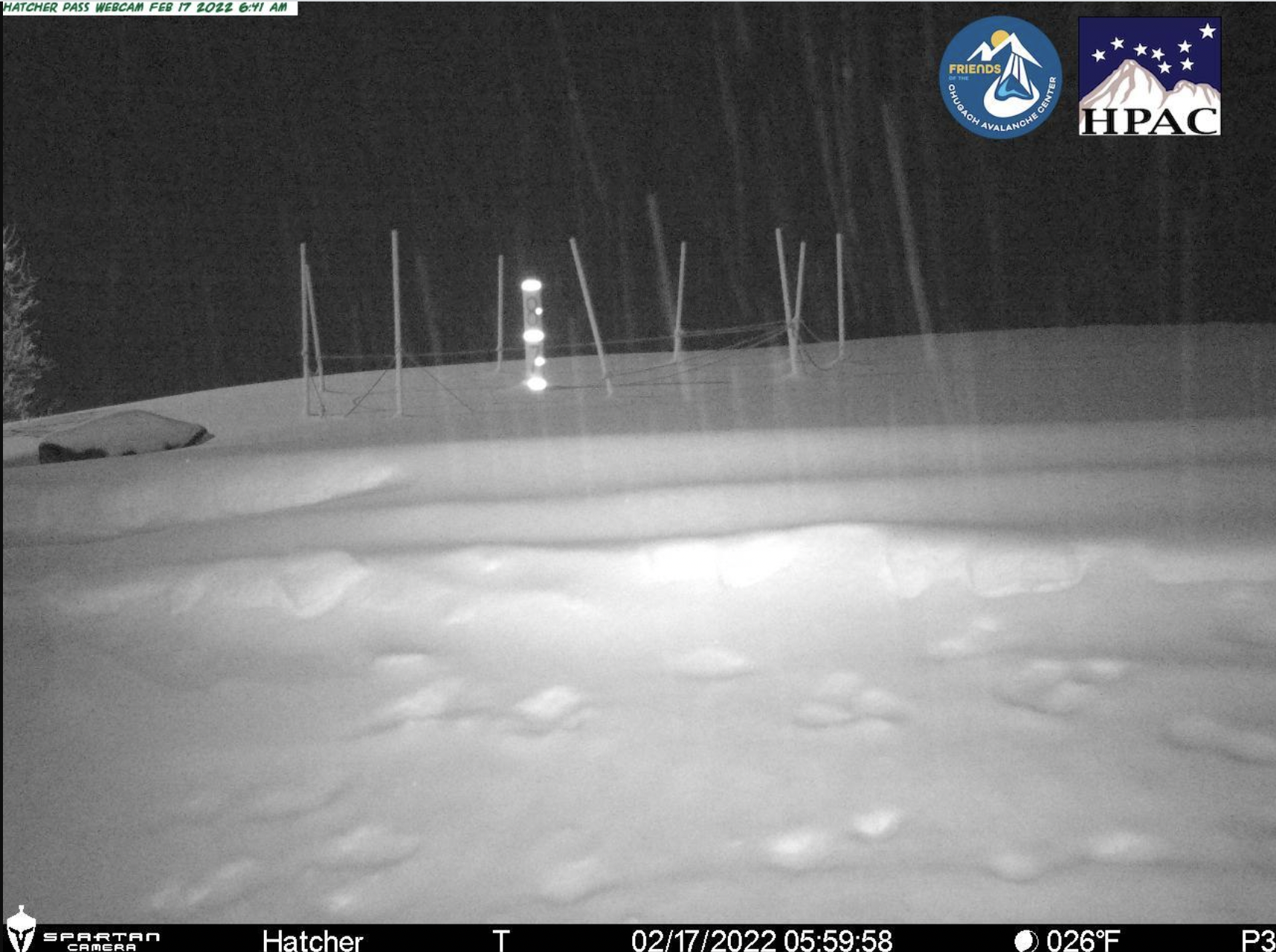
The Valentines Day Special has turned into a week long storm bringing over 3″ of water and 20″ of snow to Hatcher Pass, so far, and it is still snowing! We are expecting another 12-18″ of snow and 1.7″ SWE (water) thru mid day Friday.
Avalanche danger will remain HIGH today. Large to very large human triggered avalanches are very likely on all aspects at all elevations on slopes above 30º. Naturals avalanches are likely.
The road will remain closed at mile 11 through the weekend due to avalanche danger.
 Special Announcements
We are forecasting more than normal because of the Valentines Day Storm. If you value up-to-date life saving information please support our non-profit avalanche center HERE.

 |
 |
 |
|
 |
|
| Travel Advice | Generally safe avalanche conditions. Watch for unstable snow on isolated terrain features. | Heightened avalanche conditions on specific terrain features. Evaluate snow and terrain carefully; identify features of concern. | Dangerous avalanche conditions. Careful snowpack evaluation, cautious route-finding, and conservative decision-making essential. | Very dangerous avalanche conditions. Travel in avalanche terrain not recommended. | Extraordinarily dangerous avalanche conditions. Avoid all avalanche terrain. |
| Likelihood of Avalanches | Natural and human-triggered avalanches unlikely. | Natural avalanches unlikely; human-triggered avalanches possible. | Natural avalanches possible; human-triggered avalanches likely. | Natural avalanches likely; human-triggered avalanches very likely. | Natural and human-triggered avalanches certain. |
| Avalanche Size and Distribution | Small avalanches in isolated areas or extreme terrain. | Small avalanches in specific areas; or large avalanches in isolated areas. | Small avalanches in many areas; or large avalanches in specific areas; or very large avalanches in isolated areas. | Large avalanches in many areas; or very large avalanches in specific areas. | Very large avalanches in many areas. |
We expect that numerous natural avalanches have occurred since the 14th but due to the road closure and poor weather we are unable to provide any photos of those avalanches. we will assess as soon as the weather tapers and a weather window is available.
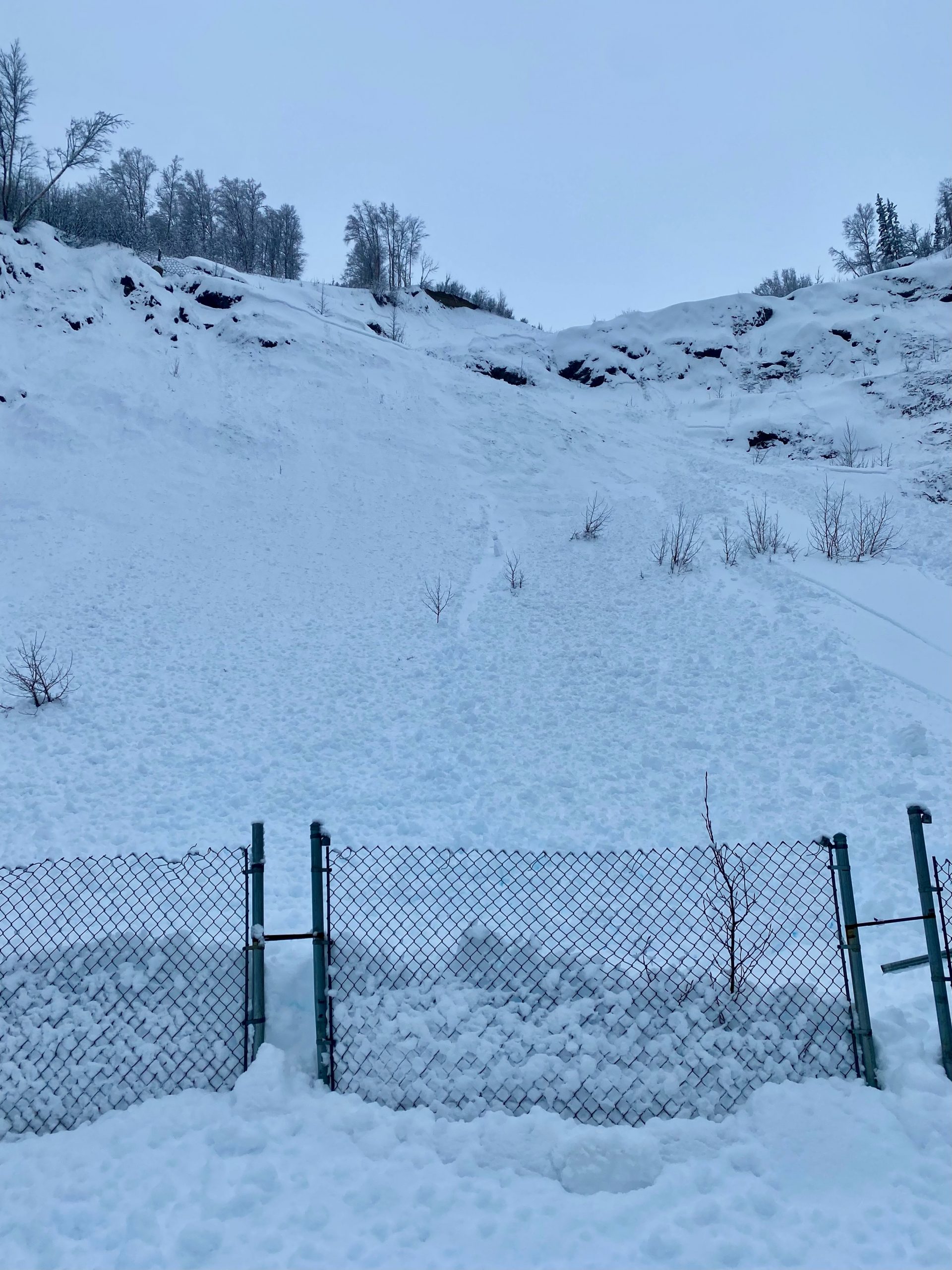
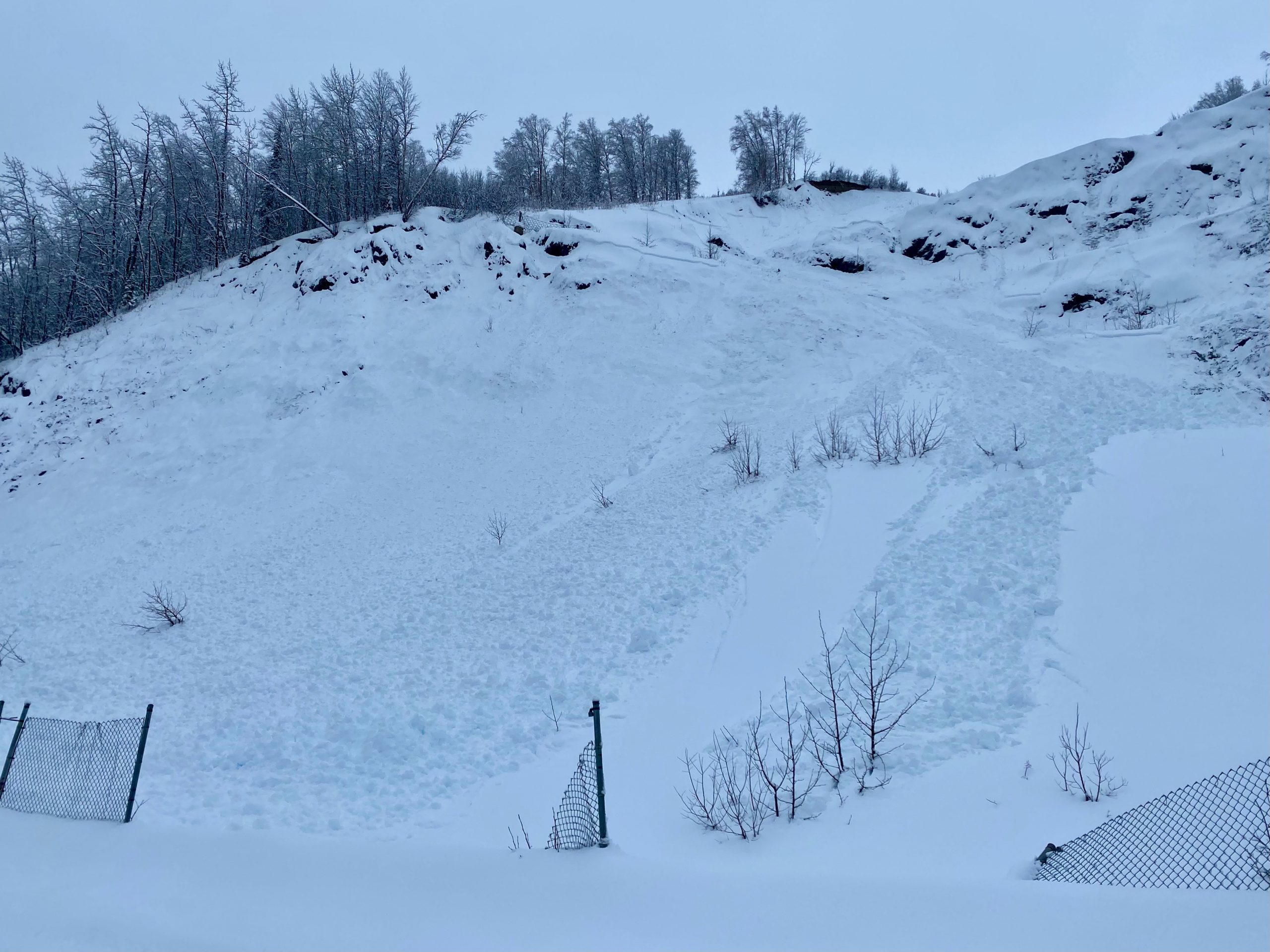
Below are a couple photos of slab avalanches at the road cut from Wednesday. These are small avalanches but indicative of a larger problem. Zoom in to see the crowns.
| Signal Word | Size (D scale) | Simple Descriptor |
| Small | 1 | Unlikely to bury a person |
| Large | 2 | Can bury a person |
| Very Large | 3 | Can destroy a house |
| Historic | 4 & 5 | Can destroy part or all of a village |
The weak layers in the snowpack are getting deeper.
1.5 to 4 ft thick persistent slabs will be very likely to human trigger on all aspects, at all elevations today on slopes steeper than 30°. Natural avalanches are likely. It will be possible to remotely trigger large avalanches from adjacent or below slopes.
The problem weak layers are the December 26 crust/sugar facet combo and the November basal, sugary facets. In many cases this season, avalanches have failed on top of the crust, and then stepped down deeper into the weak basal facets. We expect to see both these layers fail in this not so sweet Valentines storm. Shallower southerly aspects will see more avalanche activity.
Any wind will add additional stress to this weak sensitive snowpack. All our anemometers are frozen and not reporting accurate information since the freezing drizzle event on Tuesday. Winds are expected to pick up slightly for the next 12 hours SE 10-26 mph.
4 of the 5 red flags have been present over the last 24 hours. New snow, Recent avalanches, Collapsing/Cracking, and Rise in temperature. We could see it snow up to 2″/hour over the next 12-18 hrs.
We are moving towards a deep slab problem.
Very dangerous avalanche conditions. Travel in avalanche terrain is not recommended.
| Signal Word | Size (D scale) | Simple Descriptor |
| Small | 1 | Unlikely to bury a person |
| Large | 2 | Can bury a person |
| Very Large | 3 | Can destroy a house |
| Historic | 4 & 5 | Can destroy part or all of a village |
12 to 20″ thick Storm Slabs will be very likely to human trigger on all aspects at all elevations on slopes steeper than 35°. Natural avalanches will be likely.
Approximately 20″ of new snow and 3.3″ of water has rapidly accumulated at 3550′ over the since the 14th. Lower elevations have seen less snow but a similar amount of water.
It will be likely for storm slabs to step down into the persistent slab, increasing the size and consequence of an avalanche.